
What is People-Pleasing and Why Do People-Pleasers Struggle with Boundaries?
Understand the roots of people-pleasing behaviour, how it affects your relationships and boundaries, and learn practical tools to break the cycle and set healthier limits.
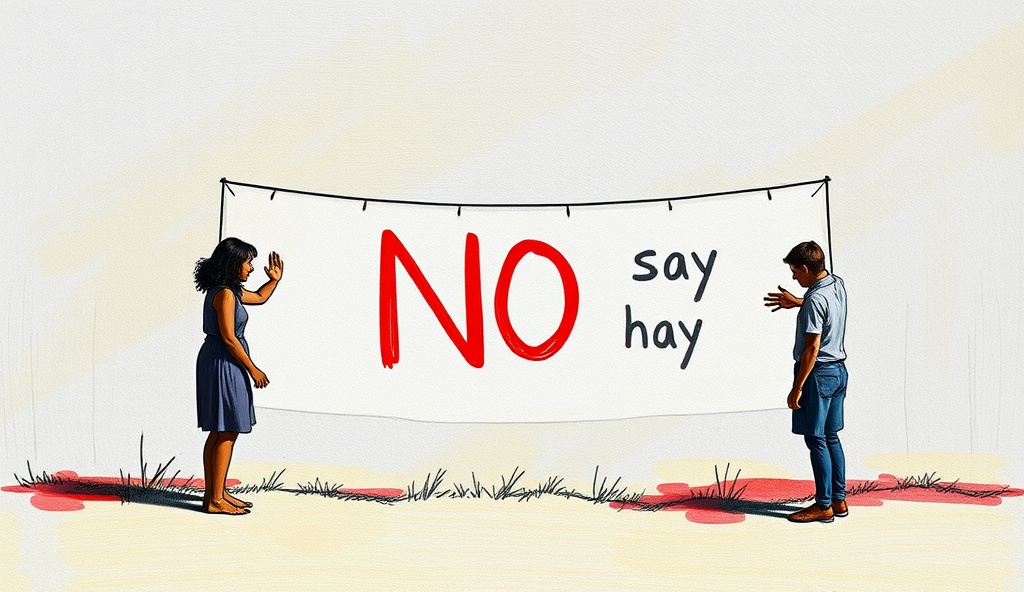
Do you find yourself saying yes when you really mean no, doing things for others at the expense of yourself, apologising when others are upset through no fault of your own, constantly worrying about how you come across, or feeling responsible for everyone else’s mood?
Could you be a people-pleaser, and could it be affecting your relationships and boundaries?
It’s more common than you might think, it’s more complicated than it can first appear…and it may have become such a habit that you might not even realise you’re doing it.
Guest Post: This article is a guest contribution from Sarah Cosway, a BABCP-accredited Cognitive Behavioural Psychotherapist with over a decade of experience working in mental health, both within the NHS and in private practice. She offers tailored CBT in a compassionate, collaborative environment, empowering clients to build resilience and manage their mental well-being with confidence. Visit https://www.coswaycbt.co.uk
How do you know if it’s kindness or people-pleasing?
There is a big difference between choosing to be kind to others and feeling like you have to be nice to them, come what may.
Wanting to help, cooperate, and care for the people in your life is a wonderful, prosocial trait and it’s how we build deep connections within our relationships.
The line between the two is choice:
- Genuine kindness is values-driven; it feels good and leaves you feeling connected.
- People-pleasing is usually fear-driven; it’s an automatic habit designed to avoid conflict, judgement, or rejection.
If your ‘giving’ comes at the constant expense of your own wellbeing, or if saying “no” triggers intense anxiety, what looks like kindness might actually be a rigid rule you’re forcing yourself to live by.
What is the root cause of people-pleasing?
These patterns often have their roots in our formative years and can develop for very different reasons:
- Modelled Behaviour: A parent or caregiver may have been a people-pleaser, making self-sacrifice feel like the only natural way to relate to others.
- Early Conditioning: You may have been consistently praised only when you were “being good” or “keeping quiet,” teaching you to prioritise others’ feelings to win approval or have a sense of belonging.
- An Intelligent Survival Strategy: For many, conflict avoidance develops as a necessary response to an unpredictable, chaotic, or unsafe environment.
It is important to recognise that in an environment where conflict brings emotional or physical danger, “keeping the peace” isn’t a psychological flaw, it is an intelligent, protective survival mechanism.
The difficulty arises when an old strategy designed to keep you safe in the past keeps playing out in the present, even in relationships where it is now safe to speak up.
If you are currently in an unsafe or abusive environment, keeping the peace may still be your best protection. Prioritising your physical and emotional safety always comes first.
How people-pleasing shows up in daily life
It can show up as rushing to fix things for other people, doing things for others that they could easily do themselves, or agreeing to things that are at best slightly inconvenient and at worst involve significant personal sacrifice.
It might mean going along with things that don’t sit right with you, or acting in ways designed to keep the peace…using people-pleasing as a form of protection, in case any sign of resistance is interpreted negatively.
Why can people-pleasing be harmful?
Over time, consistently putting others first takes a heavy toll:
- Emotional Erosion: you may find yourself missing out on things that matter to you, which can quietly affect your mood and breed hidden resentment.
- Mental Exhaustion: the constant mental energy required to monitor what others need, and predict what they might be thinking about you, is exhausting, and can lead to ongoing worry and stress.
- Loss of Self: for some people, it gradually leads to withdrawing and becoming a shadow of their former self…afraid to say or do anything that might invite judgement.
Stopping people-pleasing and setting stronger boundaries
Therapy can help you understand how the ways you are relating to others are keeping you stuck.
People-pleasing doesn’t persist because you are weak-willed; it persists because you are caught in a self-reinforcing vicious cycle. To understand this, it helps to look at the psychology behind it:
Trigger: Someone asks something of you
→ Unhelpful Thought: “If I say no, they will reject me or think I’m selfish”
→ Emotion: Anxiety / Guilt
→ Behaviour: Saying “Yes” immediately
→ Short-Term Effect: Anxiety drops immediately; relief
→ Long-Term Consequence: Exhaustion, resentment, and a reinforced belief that saying “No” is dangerous
[Loop repeats]
Notice how the behaviour provides immediate relief by lowering anxiety in the short term. Because the anxiety drops, the threat-detecting part of your brain identifies saying “yes” as a successful safety strategy.
But the long-term cost is that you never get to test the assumption that it might actually be safe to say “no”, which keeps you stuck in this loop.
Once you’ve identified your vicious cycles you can begin working on breaking them down and turning harmful patterns into something more workable.
Breaking the people-pleasing cycle: a tool to try today
Because people-pleasing can be an automatic, conditioned response, an effective way to start breaking the cycle is to create space between the request and your automatic “yes”.
When someone makes a request of you, your anxiety probably wants you to say “Yes” immediately because that will give you relief (albeit short-term).
You can begin stepping out of the loop by practising a simple behavioural pause:
- Buy Yourself Time: When you’re asked to commit to something, resist the urge to answer there and then on the spot. Prepare a phrase in advance which is designed to create space for you. Something along the lines of “Let me check my diary and I’ll let you know” or “I need to think about that, I’ll get back to you by tomorrow”.
- Check the Cost: use this time that you have bought yourself to evaluate the long-term impact on you of the request by asking yourself something like “If I say yes to this, what am I saying no to in my own life?”
- Deliver a Clean Refusal: if you decide to say “No”, then keep your response brief, clear, and free of over-explaining or manufacturing elaborate excuses. A simple, polite boundary is enough: “I’d love to help out normally, but I don’t have the capacity for this right now”. If you go into too much detail the other person may see this as a challenge to problem-solve for you as they try to manoeuvre you into agreeing.
The assertiveness misconception
A common worry when starting to set boundaries is the fear that becoming more assertive means risking becoming aggressive, difficult, or selfish.
It helps to view communication as a spectrum - On one end is passivity (sacrificing your needs for others) and the other end is aggression (demanding your needs at the expense of others).
Therapy can help you find the healthy middle ground: assertiveness - a collaborative position where your needs are treated with the exact same validity as anyone else’s, which allows for everyone to get something, without anyone getting everything at your expense.
How professional support can help with people-pleasing
Self-help strategies are a great starting point, but when patterns are deeply ingrained, professional support can make the process feel safer and more manageable.
A therapist can help you safely explore the underlying core beliefs that drive your fear of rejection, and help you navigate to a middle ground where you can assert your needs clearly without risking aggression.
For many people, the real turning point is learning that setting boundaries in relationships doesn’t mean becoming a different person; it means finally being heard as yourself.
People-pleasing can feel like kindness, but you deserve to have your own needs met too.
Related Resources on Boundaries and Relationships
Explore more about relationships, boundaries, and mental health:
- Strengthening Relationships Through Communication and Trust - Building healthy connection patterns
- How to Talk to Your Partner About Couples Therapy - Starting difficult conversations
- When Do Couples Need Therapy? - Recognizing relationship challenges
- Understanding Anxiety: What’s Really Happening in Your Body - Connection between anxiety and people-pleasing
Ready to explore your patterns with professional support? Contact us to discuss how CBT therapy can help you build stronger boundaries and reclaim your sense of self.
Tags:
Explore My Therapeutic Services
Ready to explore therapy?
If this article resonates with you, I'd be happy to discuss how therapy can support your mental health and wellbeing.
Book Your Free Consultation